
KELAB PENCINTA ALAM,
MAKTAB SULTAN ABU BAKAR,
JOHOR BAHRU


Learn more about nature!
TURTLE


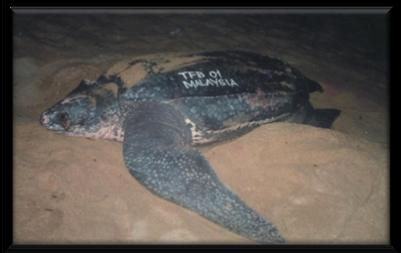


How can I protect turtles?
Do
-
Stop eating turtle eggs.
-
Support turtle conservation efforts.
-
Check with the proper agencies before developing any beach area.
-
Tell everyone why it is important to protect turtles.
-
Donate time, effort or money to help with efforts to protect the turtles.
Don’t
-
Pollute the sea with plastic bags and other rubbish especially those that will not decay.
-
Destroy the marine environment when you snorkel or dive by kicking coral or collecting it.
-
Buy turtle and coral handicraft.
-
Disturb the turtle when it is laying eggs.
-
Use fishing equipment which will harm turtles.
https://youtu.be/mkfAnQtIUCw
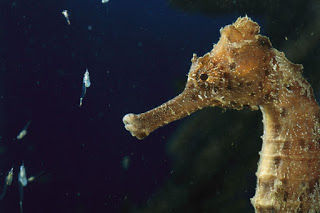


SEA HORSE
Seahorse Facts
Name
The Latin name for seahorse is Hippocampus which means "Horse Caterpillar"
What is a Seahorse
Seahorses are fish. They live in water, breath through gills and have a swim bladder. However they do not have caudal fins and have a long snake-like tail. They also have a neck and a snout that points down.
British Seahorses
There are two species around British Coastline, the Spiny Seahorse (Hippocampus Guttulatus and the Short Snouted Seahorse (Hippocampus Hippocampus).
Both British Seahorses can be found from the Shetland Isles down the west coast of the UK (and all around Ireland) and along the south coast of England; we also have sightings of Seahorses on the east coast and a few years ago they were found in the North Sea.
Eyesight
Seahorses have excellent eyesight and their eyes are able to work independently on either side of their head. This means they can look forwards and backwards at the same time! This is particulartly useful as they hunt for food by sight.
Snout
Seahorses have long thin snouts enabling them to probe into nooks and crannies for food. When they find food they suck it up through their snouts like a vacuum cleaner. Their snouts can expand if their prey os larger than the snout. They are not able to chew and have to disintergrate the food as they eat it.
Diet
Seahorses eat small crustacea such as Mysis Shrimp. An adult eats 30-50 itmes a day. Seahorse fry (baby seahorses) eat a staggering 3000 pieces of food per day.
Territory
Females have a territory of about 1.4 sq metres and males have a territory of about 0.5 sq metres. Their territories overlap.
Courtship
Seahorses pair for life. They meet first thing in the morning to reinforce their pair bonding with an elaborate courtship display.
The female meets the male in his territory and as they approach each other, they change colour.
The male circles around the female and the pair often spiral around an object.
display can last for upto an hour. Once over the female goes back to her territory.
Pregnancy
The male is the only creature where the male has a true reversed pregnancy. The female transfers her eggs to the male which he self fertilises in his pouch. The number of eggs can vary from 50-150 for smaller species to 1500 for larger species.
They receive everything they need in the pouch from oxygen to food. Gestation time varies from 14 days to 4 weeks. Giving birth can be a long process with contractions lasting upto 12 hours.
Baby Seahorses
Baby seahorses are known as fry and when they are born they are totally on their own. They spend the first two to three weeks of their lives drifting along in the plankton layer of the ocean. Less than one in a thousand will survive long enough to become an adult due to predators.
Tail
Seahorses have a prehensile tail. This allows them to grip onto eel grass and other weeds and prevents them from being washed away by strong currents and waves.This
Colour
Seahorses can change colour very quickly and match any surroundings in which it finds itself. They have even been known to turn bright red to match floating debris.
Both males and females also change colour during their courtship display.
Body
Unlike most other fish, seahorses have an exo-skeleton. Their bodies are made up of hard, external, bony plates that are fused together with a fleshy covering. They do not have scales.
Movement
Seahorses are poor swimmers. They rely on their dorsal fin beating at 30-70 times per second to propel it along. Pectoral fins either side of the head help with stability and steering.
Appendages
Seahorses are able to grow fleshy appendages called cirri on their bodies. This gives them a weed like appearance and helps with camouflage.
Species
There are between 30 and 40 species of seahorses worldwide, and possibly as many sub-species. It is often difficult for scientists to identify seahorses because individuals of the same species can vary greatly in appearance. New species continue to be found.
Habitat
Seahorses live in shallow weedy areas especially eel grass beds. In winter they move into deeper waters to escape the rough weather.
Threats
Seahorses are under threat worldwide for three main reasons:
-
The Traditional Chinese Medicine Trade takes in excess of up to 150 million seahorses a year from the wild and these are used for all types of medicine.
-
The Curio Trade takes approximately one million seahorses from the wild. Along with shells and starfish; they are deliberately taken from the sea and left to die in the boiling sun. They are then sold as souvenirs, sad and sorrowful reminder of once beautiful creatures.
-
The pet trade takes an estimated one million seahorses from the wild and It is thought that less than 1,000 survive more than six weeks, very often suffering a slow and possibly painful death.


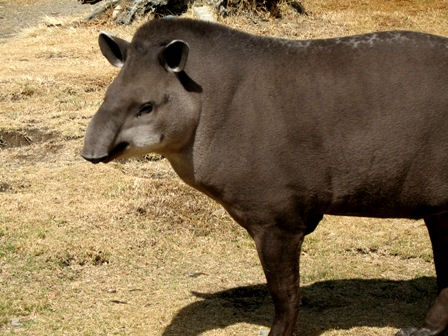
TAPIR
-
Family Tapiridae
-
Brazilian Tapir or Lowland Tapir (Tapirus terrestris)
-
Mountain Tapir (Tapirus pinchaque)
-
Baird's Tapir (Tapirus bairdii)
-
Malayan Tapir (Tapirus indicus)
-
Kabomani Tapir (Tapirus kabomani)
-
-
Tapirs are about 2 m / 7 ft long and about 1 meter / 3 ft high. They weigh between 150 - 300 kg / 330 - 700 lb. They have a rounded body and very short stubby tails. Tapirs have hoofed toes, with four toes on the front feet and three toes on the hind feet. The Tapir's upper lip and nose have formed a short trunk, and they have a long tongue.
Tapirs have a short fur, with colors that are reddish-brown to grey to nearly black. Exceptions are the Mountain Tapir and the Asian Tapir. The Mountain Tapir has longer wooly fur. The Asian Tapir has a black front part and legs, and a white middle part and back. All baby tapirs have brown fur, with lighter stripes and dots for camouflage.
Tapirs cannot see very well, but they have good hearing and a very good sense of smell. Tapirs also swim very Tapirs are active at night. They eat leaves, fruit, berries, vegetables and nuts.Tapirs live alone. After a pregnancy of about 13 months, the female gives birth to a single baby. After half a year the baby starts to lose the baby-coloring of its fur. When the young tapir is one year old it looks like an adult tapir, and it leaves its mother. Tapirs become mature when they are 4 years old. Tapirs can become 25 - 30 years old.well.
-